Veröffentlicht am: 25.09.2026 um 07:10 Uhr:
ca. 4 Minute(n) Lesezeit
MEDICA: How AI, Robotics and Precision Diagnostics Are Reshaping Laboratory Medicine
» Laboratory medicine moves closer to the patient
Laboratory medicine may often operate behind the scenes, but its findings provide an essential basis for decisions across numerous medical disciplines. From prevention and diagnosis to treatment selection and monitoring, laboratory data are an integral part of modern healthcare.
The field is now entering a period of significant change. Automation, artificial intelligence, molecular diagnostics and decentralised testing are beginning to alter not only how laboratories work, but also where diagnostic information is generated and how quickly it can become available to clinicians.
These developments will be explored at the MEDICA LABMED FORUM 2026, taking place from 16 to 19 November during MEDICA in Düsseldorf. Led by Prof. Dr Stefan Holdenrieder of the German Heart Centre Munich at the Technical University of Munich, the programme will address workforce shortages, robotics, AI, Laboratory 4.0, precision diagnostics and health resilience.
The focus reflects MEDICA's own history. The trade fair began as "Diagnostics Week" in 1969, making laboratory medicine one of its longstanding core disciplines.
Technology as a response to workforce shortages
One of the most immediate challenges is the shortage of qualified laboratory professionals. The opening sessions on 16 November will examine strategies ranging from attracting new talent to automating manual processes.
The underlying question is how technology can relieve specialist staff of routine duties and free up capacity for more demanding medical tasks. Automation could become particularly relevant for night and weekend services, where robotic systems may increasingly assume repetitive laboratory processes.
Logistics is another area undergoing change. As laboratories become more centralised, specimens may have to travel longer distances. The forum will therefore examine whether drones and autonomous robots could make specimen transportation more efficient and reliable.
AI and the rise of Laboratory 4.0
The second day turns to the laboratory of the future. Artificial intelligence could support workflows by analysing complex findings more quickly and providing a broader data basis for medical decisions.
At the same time, diagnostics may increasingly move beyond the conventional central laboratory. Decentralised testing, lab-on-a-chip technologies, standardised laboratory values and AI could bring diagnostic information closer to the point of care, including hospitals, medical practices and potentially patients' homes.
Advances in genomics and epigenomics add another dimension. Professor Martin Widschwendter of the University of Innsbruck will present an early cancer detection programme based on epigenetic changes in cell-free DNA found in blood plasma. According to the programme announcement, the approach is being implemented in the UK, with expansion to Australia planned.
Precision diagnostics promise more individualised treatment
Precision diagnostics will take centre stage on 18 November. One key topic is the development of new biomarker technologies and their transition from research into clinical decision-making.
Liquid biopsies are an important example. These methods detect molecular changes using cell-free tumour DNA circulating in blood plasma. They could help clinicians identify changes in the course of cancer earlier and tailor treatment decisions more closely to an individual patient's condition.
Technological transformation, however, also requires appropriately trained professionals. The programme therefore includes career perspectives in clinical medicine, research, quality assurance, self-employment and the diagnostics industry, linking technological innovation with the longer-term challenge of recruiting and retaining specialists.
Building more resilient healthcare systems
On the final day, the discussion will broaden from individual diagnoses to the resilience of healthcare systems. The question is not only whether modern diagnostics can detect diseases earlier, but also whether automation, decentralised testing, digital connectivity and more efficient processes can help healthcare services remain effective under pressure.
The programme will also examine the path from scientific discovery to patient care. Prof. Dr Johnny Kim, spokesperson for the Cluster4Future curATime innovation network, will use mRNA-based regenerative therapies for cardiovascular diseases as an example of how research findings can progress through industrial development towards clinical treatment.
Ultimately, this transition remains one of the central challenges facing laboratory medicine. Technological capability alone does not guarantee better healthcare. The decisive factor will be whether innovations can be successfully integrated into clinical processes, provide meaningful support for healthcare professionals and ultimately deliver tangible benefits for patients.
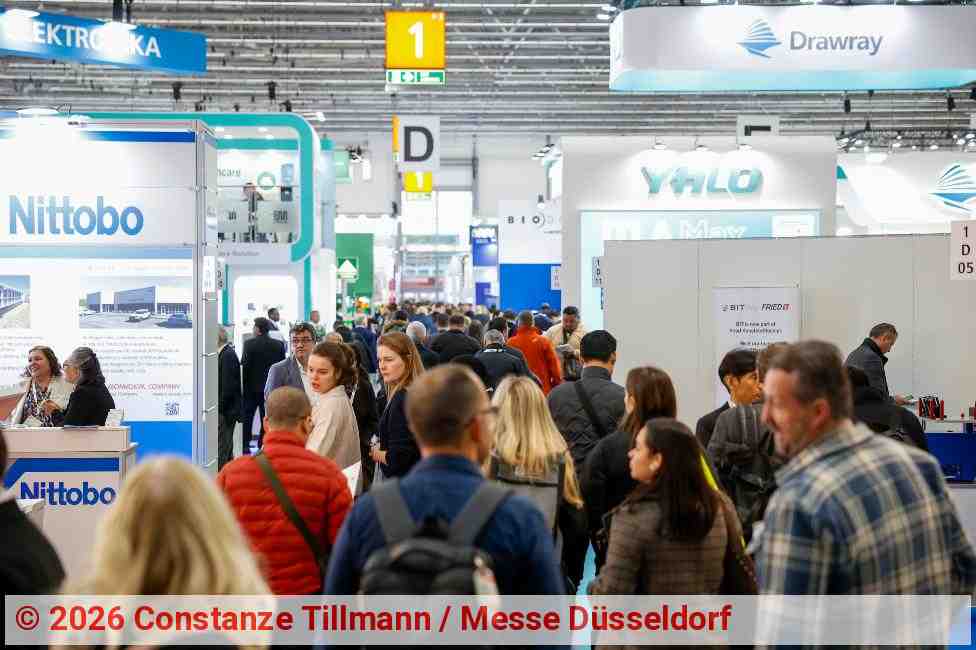
The MEDICA LABMED FORUM 2026 will take place from 16 to 19 November in Hall 1 at MEDICA and is accessible with a standard MEDICA ticket. «
Source: Press release from Messe Düsseldorf GmbH dated 23 September 2026 / edited with the help of Copilot (AI)